
How to measure your PD
Your pupillary distance (PD) tells us where to center each lens so you’re looking through the sharpest part. It takes about a minute to measure at home — here’s how.
What PD actually means
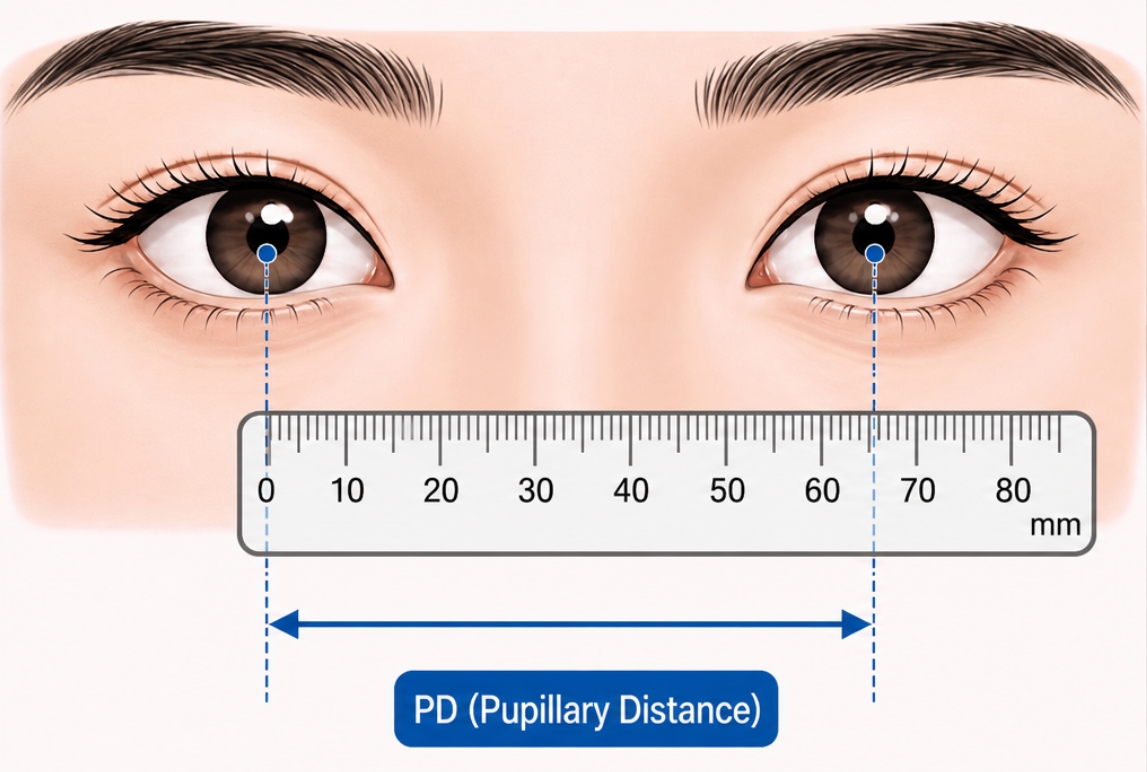
PD is the distance, in millimeters, between the centers of your two pupils. Most adults land between 54 and 74 mm.
Method 1: Mirror & ruler
The classic do-it-yourself way. A millimeter ruler and a mirror are all it takes — line the ruler up just like the picture above.
Method 2: Ask a friend
Usually the easiest and most accurate, since you can keep your eyes relaxed and looking into the distance.
Single PD vs. two PD numbers
You’ll see PD written one of two ways. Both are fine — just enter what your measurement gives you.
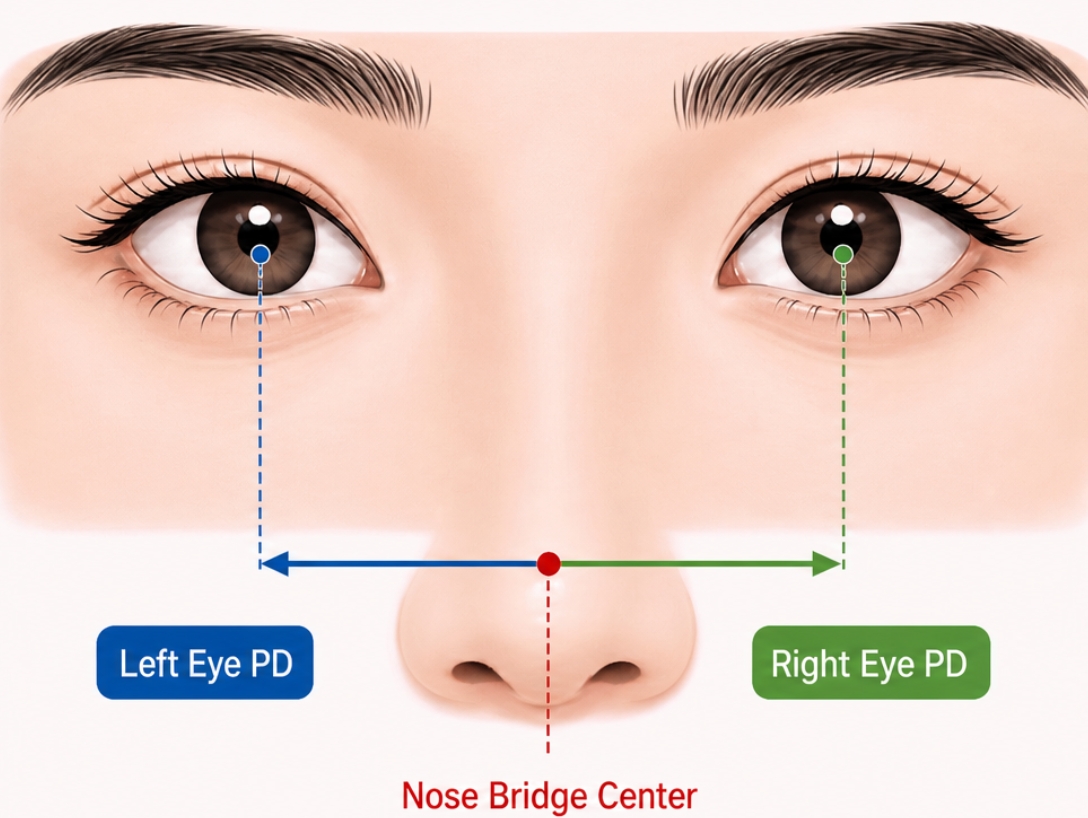
Single PD is one number — the total gap between your pupils, e.g. 63 mm. This is what the mirror and friend methods above give you, and it’s all most orders need.
Two PD numbers (also called dual or monocular PD) measure each pupil from the center of your nose, e.g. 31.5 / 31.5. Opticians sometimes write PD this way, especially for progressives.
Can’t measure right now?
As a last resort you can start from a typical value — but a real measurement always gives the sharpest result, especially for stronger or progressive lenses.
For the most accurate reading
- Look into the distance, not at the ruler. Focusing up close pulls your pupils inward and shrinks the number.
- Keep the ruler level and steady against your brow, and work in good light so you can see each pupil’s center.
- Measure three times and average. If your readings vary by more than a millimeter or two, take them again.
- Strong or progressive prescription? Accuracy matters more here — a quick measurement from an optician is worth it if you’re unsure.