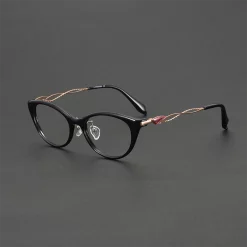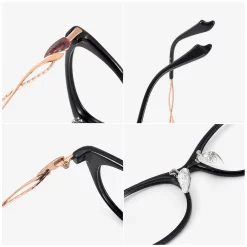
Handmade Eyewear in Natural Materials, Made in Small Batches
Each frame in this collection passes through dozens of hand-finishing steps: edges beveled by hand, barrel hinges polished individually, temples shaped over open flame rather than machine press. The materials are chosen for character, not consistency — natural horn with grain that varies from pair to pair, sustainably sourced wood, and premium acetate blocks aged before cutting.
Production runs are small by design. When a batch sells out, the next one takes weeks, not days — because the process can’t be rushed without becoming a different process. Every frame ships with its batch number.
Why Handmade Frames Feel Different
- Fit. Hand-finished edges and individually tuned hinges mean contact points at the nose and temples are smoothed to a tolerance machines don’t bother with. The difference is subtle on minute one and obvious on hour eight.
- Uniqueness. Natural horn and wood grain cannot be replicated — no two frames in a batch are identical, and no frame outside your batch matches yours.
- Sustainability. Small batches mean no overproduction and no landfill-bound inventory. Natural horn and wood are renewable, biodegradable materials with a fraction of the footprint of virgin plastic.
Frequently Asked Questions
Q: What does “handmade” actually mean at RickGlasses?
A: Specifically: frame fronts are cut from solid material blocks, then hand-filed and hand-beveled at the edges; temples are shaped and bent over open flame by a craftsperson, not a heat press; hinges are inserted and aligned individually; and every frame is tumble-polished, then finished by hand with progressively finer compounds. A single frame represents hours of skilled labor across dozens of discrete steps — not a machine-made frame with one decorative hand-applied detail.
Q: How long do natural horn and wood frames last?
A: With proper care, many years — horn in particular is prized for aging gracefully, developing a deeper luster over time. Keep them away from prolonged water immersion and extreme heat, and condition horn occasionally with a drop of neutral oil on a soft cloth. Every Artisan Heritage frame is covered by our warranty against manufacturing defects, and we offer a re-polishing service to restore the finish after years of wear.
Q: Why do handmade frames cost more?
A: Two honest reasons: time and waste. Hours of skilled handwork go into each frame, versus seconds of machine time for a molded frame. And natural materials carry high rejection rates — a horn plate with a flaw in the wrong place is discarded, and that loss is built into the cost of the frames that pass. You’re not paying for a logo; you’re paying for labor and material integrity you can inspect with your own hands.